Museum Quest
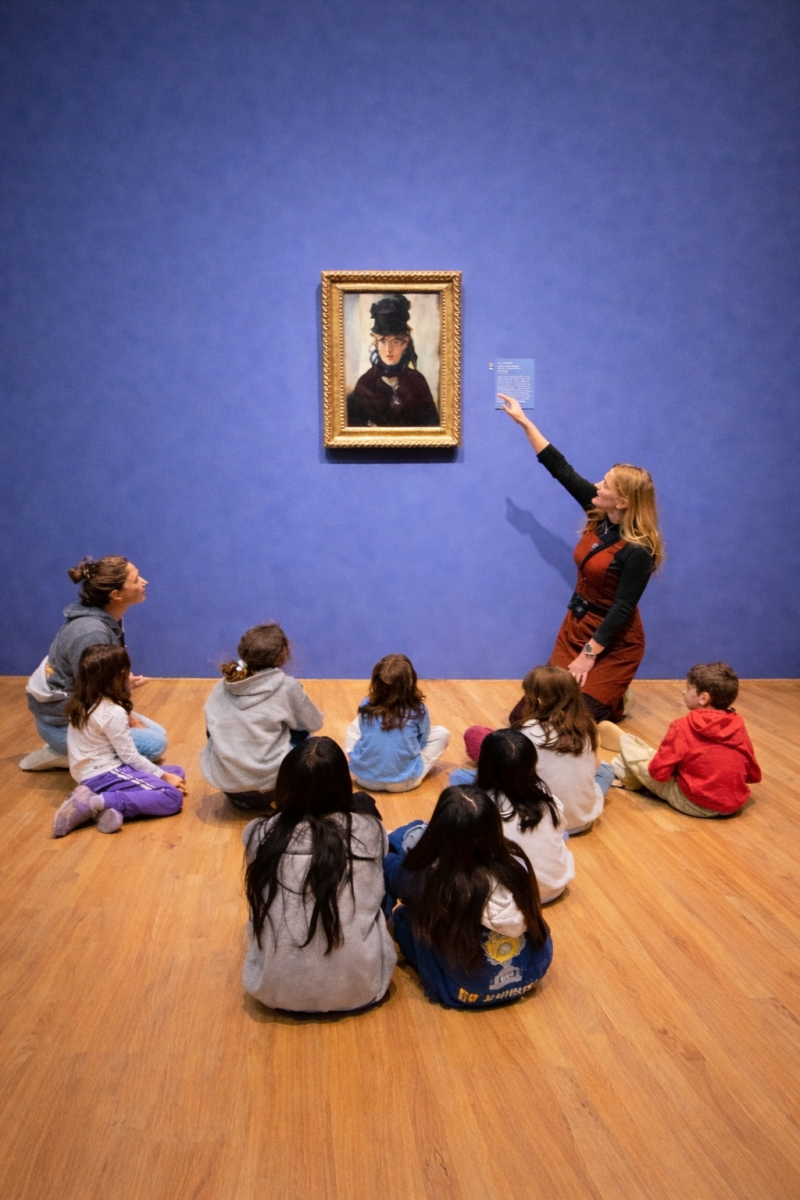
Once or twice per quarter, EFBA offers an original, play-based program of cultural discovery in French in various museums and cultural sites.
The annual program covers 5 different destinations. These museums or cultural sites are located all over the Bay Area and present various subjects mixing history, geography, nature, science, art and other human social or technological creations. Each destination offers its own journey of discovery, with various treasures and secrets.
A booklet with games guides the children through the different galleries and exhibits. Each team, chaperoned by an adult, will make careful observations to solve the final riddle of the scavenger hunt through the Art Gallery…
Upcoming sessions:
Museum Visit: The Treasures of the Pharaohs
Sunday, November 8th, 2026 (9 to 11:30 am Pacific Time)
Museum Visit: Exploring the Worlds of Joan Miró and Paul Éluard
Saturday, January 30th, 2027 (9:15 to 11:30 am Pacific Time)
Museum Visit: The Treasures of the Pharaohs
About the Event
As part of our Museum Quest program, EFBA invites children ages 6 to 13 to enjoy a museum visit entirely in French, where they will step into the fascinating world of ancient Egypt and discover the treasures of a civilization that continues to captivate us more than 3,000 years after its height.
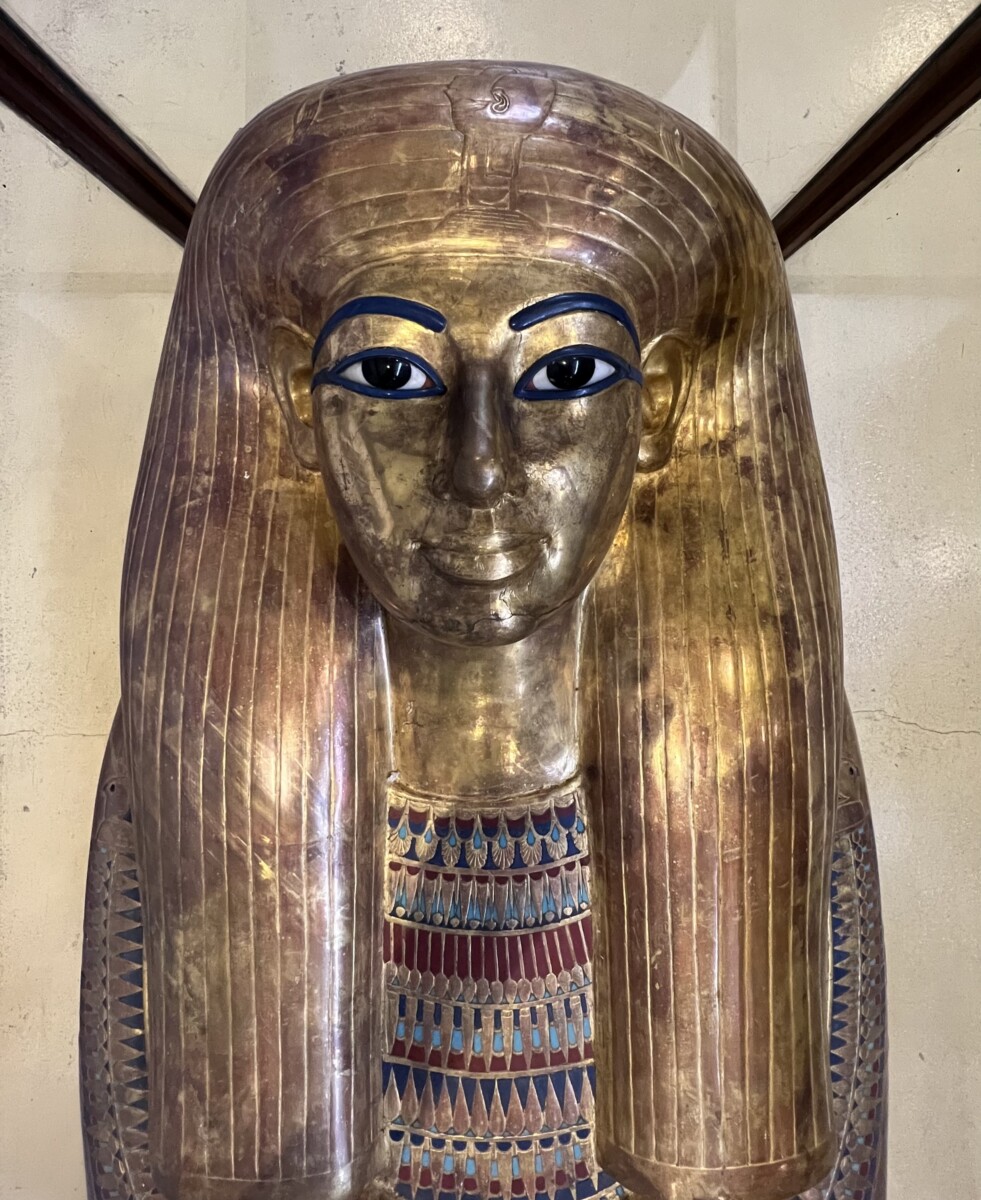
On Sunday, November 8th, 2026 from 9 to 11:30 am, participants will explore the Treasures of the Pharaohs exhibition at the de Young Museum as a group. Featuring more than 130 extraordinary objects — from monumental stone statues and gilded masks to intricate jewelry, everyday objects, and funerary artifacts — the exhibition offers a fascinating look at the power of the pharaohs, ancient Egyptian beliefs, and their understanding of life after death.
Learning Objectives
This activity blends cultural discovery and language practice in a relaxed, friendly setting. During the visit, children will:
- Discover the role of the pharaoh as both a ruler and a sacred figure in ancient Egypt.
- Understand why death and the afterlife played such an important role in ancient Egyptian civilization.
- Examine objects that are thousands of years old and consider what they can teach us about everyday life in ancient Egypt.
- Develop their observation and visual literacy skills by learning to look for clues in works of art and archaeological artifacts.
- Practice speaking French as they describe, compare, make hypotheses, and share their observations.
- Expand their French vocabulary related to history, archaeology, art, and ancient Egypt.
|
Cultural Focus From Egypt to San Francisco: The Journey of the Pharaohs’ Treasures The approximately 130 objects featured in Treasures of the Pharaohs are not part of the de Young’s permanent collection: they have traveled thousands of miles to reach San Francisco. The vast majority come from the Egyptian Museum in Cairo, while others come from the Luxor Museum or from recent archaeological excavations in Egypt. Among the exhibition’s most spectacular pieces is the gilded coffin of Thuya, discovered in 1905 in the Valley of the Kings near Luxor. Thuya was neither a queen nor a pharaoh, but she was a woman of very high status and is known today as the great-grandmother of the famous pharaoh Tutankhamun. Her tomb, which she shared with her husband Yuya, was exceptionally well preserved and still contained much of its original funerary equipment when it was discovered. Children will also have the opportunity to see objects that once belonged to actual rulers and members of the royal family, including gold jewelry, funerary masks, sarcophagi, and even a gilded chair belonging to Princess Sitamun. Some of the objects in the exhibition date back approximately 5,000 years. But not all of these treasures belonged to pharaohs. Part of the exhibition features objects discovered in the “Golden City,” a roughly 3,000-year-old settlement uncovered near Luxor. Unlike royal jewelry and elaborate funerary objects, archaeologists found remarkably ordinary items there, including tools, pottery, and even a baby rattle. Because the city was suddenly abandoned, these objects offer a remarkable snapshot of everyday life and help us understand how ancient Egyptians who were neither pharaohs nor members of the royal family lived. Did you know? This exhibition marks the North American debut of discoveries from the Golden City. Before arriving in San Francisco, the treasures were exhibited in Rome and then crossed the Atlantic to join us at the de Young Museum! After San Francisco, they will continue their journey to the Kimbell Art Museum in Texas. Some of these objects had already traveled quite a journey before this exhibition. After spending thousands of years buried in Egypt, they are now preserved in museums in Cairo and Luxor and leave Egypt only on exceptional loans for international exhibitions. |
Date and Time of the Museum Visit: Sunday, November 8, 2026 · 9:00–11:30 a.m.
Where: de Young Museum, Golden Gate Park, 50 Hagiwara Tea Garden Drive, San Francisco, CA 94118
Event Schedule:
- 9:00 am: Drop-off in front of the museum
- 9:00-11:30 am: Guided exhibition visit in French
- 11:30 am: Pick-up in front of the museum
Who Can Participate? This program is designed for children ages 6–13 who are comfortable with French. Participants should be able to:
- Express themselves comfortably in French
- Understand the main ideas of group conversations
Questions about your child’s French level? Email us at admissions@efba.us before registering.
During the visit, participants should bring:
- Comfortable shoes
- …that’s it!
Prices:
- EFBA students (2026-2027 school year): $29
- General admission: $34
Museum Visit: Exploring the Worlds of Joan Miró and Paul Éluard
About the event
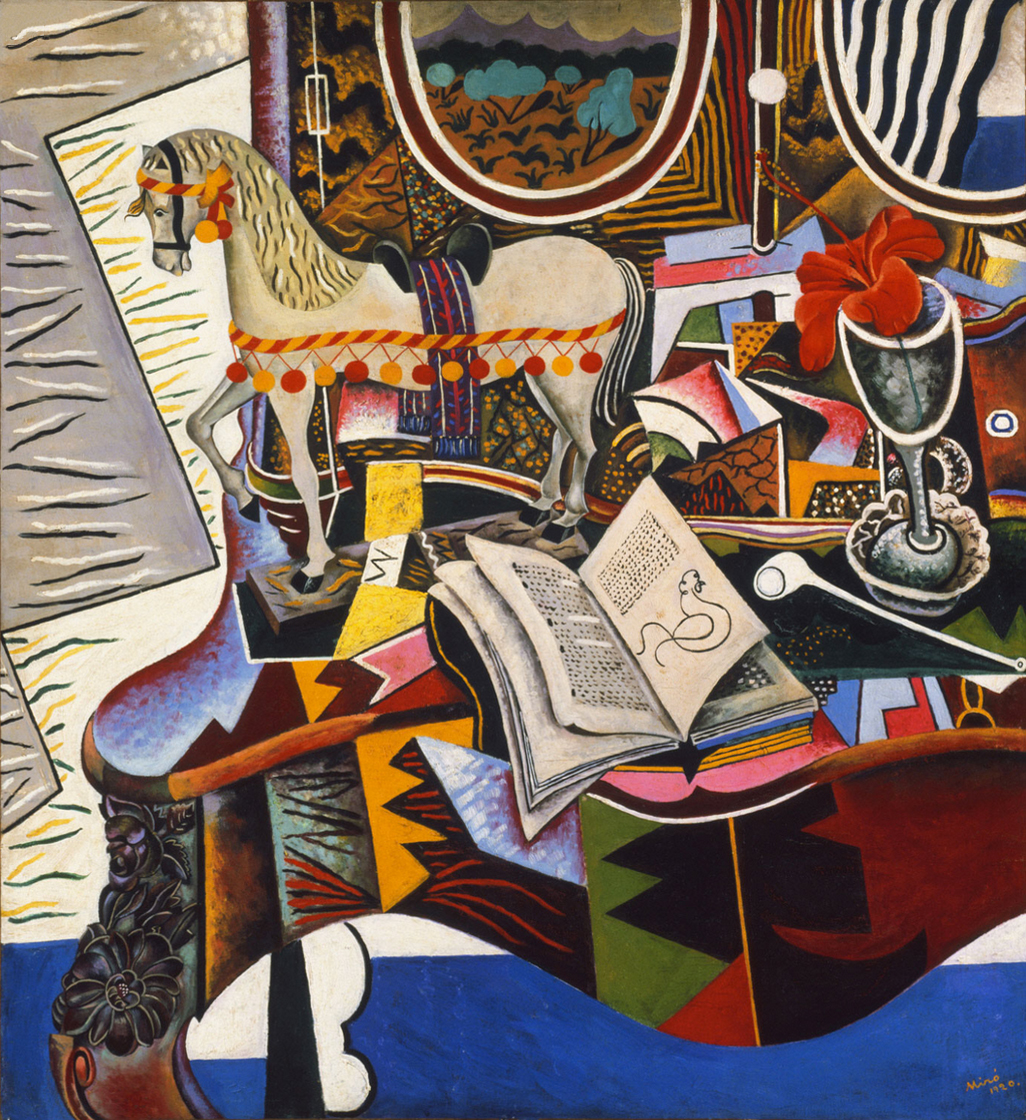
As part of its Museum Quest program, EFBA invites children ages 6–12 to a French-language museum visit exploring the colorful, poetic, and surprising worlds of Joan Miró and Paul Éluard, two major figures of 20th-century art and literature.
On Saturday, January 30, 2027, from 9:15 a.m. to 11:30 a.m., participants will visit the Miró: Proof Against All exhibition at San Francisco’s Legion of Honor. The group visit will be led by Gabrielle Durana, EFBA’s founder and president.
The exhibition focuses on À toute épreuve, an extraordinary artist’s book born from the collaboration between Paul Éluard’s poetry, Joan Miró’s artwork, and publisher Gérald Cramer. Children will discover how words, colors, shapes, and pages can interact with one another without necessarily telling the exact same story.
🎁 Six days before the museum visit—Sunday, January 24, from 10:00 to 11:00 a.m.—EFBA will offer participants a complimentary interactive online workshop to help them prepare for the visit in a fun and engaging way. Together, we will learn about Joan Miró, Paul Éluard, and their connection to À toute épreuve. Children will also explore Catalonia—Miró’s native region—its culture and languages, as well as the Catalan cultural region extending across the Pyrenees into southern France.
Participation in this preparatory activity is recommended. A recording will be sent to children who are unable to attend live. The workshop will help participants better understand the exhibition.
Learning Objectives
This activity combines educational value with a relaxed, fun, and friendly atmosphere. Children will:
- Discover Joan Miró’s and Paul Eluard’s artistic worlds
- Explore Catalonia, Miró’s native region, and discover how a culture can thrive through multiple languages and across national borders
- Develop their visual literacy by learning to observe, describe, and interpret artistic choices with curiosity and confidence
- Expand their French vocabulary related to art, books, colors, shapes, poetry, and creative expression
|
Cultural Spotlight Joan Miró, Paul Éluard, and a Book Unlike Any Other
Who was Joan Miró? Joan Miró was a Catalan painter, sculptor, printmaker, and ceramicist. He was born in Barcelona on April 20, 1893, and died in Palma de Mallorca on December 25, 1983. He was one of the leading figures of the Surrealist movement. His work reflects his fascination with the subconscious, childlike creativity, and Catalonia. His early work was strongly influenced by Fauvism, Cubism, and Expressionism before evolving toward a flatter, more naïve style of painting. Who was Paul Éluard? Paul Éluard was the pen name of Eugène Grindel, a French poet born in Saint-Denis, France, on December 14, 1895. He died in Charenton-le-Pont on November 18, 1952. After becoming involved in the Dada movement, he emerged as one of the leading figures of Surrealism and helped pave the way for politically engaged art through his involvement with the French Communist Party. He is especially well known for his poem Liberté. A Collaboration Across Time Paul Éluard wrote the poems featured in À toute épreuve in 1929. Nearly 20 years later, Joan Miró began the ambitious process of transforming them into an artist’s book. Rather than illustrating each line literally, Miró created images with a world of their own, allowing them to enter into a free-flowing dialogue with the poems. The book was finally published in 1958, after Éluard’s death. A Collaboration Across Time To produce the 80 prints featured in À toute épreuve, Miró created more than 230 carved woodblocks and worked on the project for nearly ten years. He became so consumed by the book that he sometimes jokingly referred to it as “that darn book”! Although the prints look remarkably free and colorful—almost like brushstrokes—they were actually printed using carved woodblocks. |
Date and Time of the Museum Trip: Saturday, January 30, 2027 – 9:15 to 11:30 a.m. (PST)
Where: Legion of Honor, 100 34th Avenue, San Francisco, CA 94121
Event Schedule:
- 9:15 am: arrival of the families in front of the Legion of Honor
- 9:15-11:30 am: tour of the exhibit
- 11:30 am: families pick up their child(ren) in front of the museum
| 🎁 Bonus Online Workshop 🎁
As a special bonus, all museum visit participants will automatically be registered for a free online activity introducing them to Joan Miró, Paul Éluard, and Catalonia.
🗓 Date: Sunday, January 24, from 10:00 to 11:00 a.m.
Is your child unavailable that day? No problem! A recording of the workshop will be sent to participants who are unable to attend live. |
Who Can Participate? This activity is open to children ages 6 to 12 who already have some proficiency in French—at least two recent years of French study or equivalent. A language assessment is required for children not enrolled in EFBA’s 2026–2027 programs. For EFBA students, a minimum level of FSL3 or enrollment in the Francophone track is required.
Participants must be able to:
- Speak French comfortably
- Understand the main ideas of conversations on a wide range of topics
Questions about your child’s French level? Email us at admissions@efba.us before registering.
During the visit, participants should bring:
- Comfortable shoes
- …that’s it!
Prices & registration:
- EFBA students: $29
- General admission: $34
➡ This fee includes the guided museum visit and access to the online preparatory workshop (participation in the online session is highly recommended but optional).